 Romas
Romas1. Introduction: The Call of the High Country
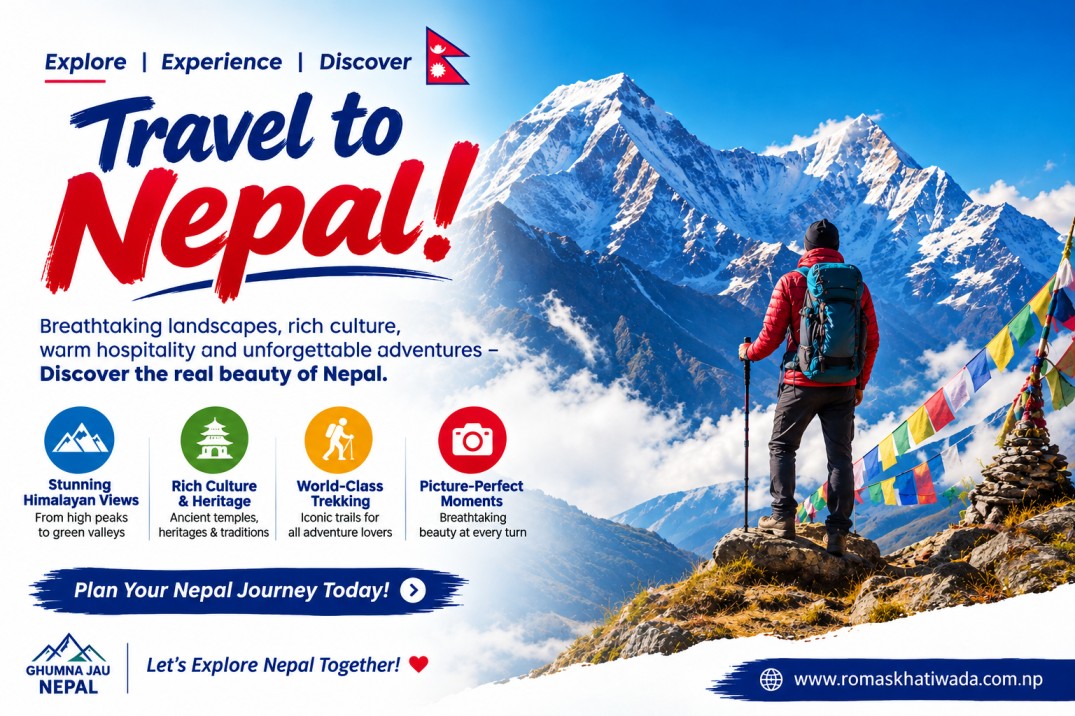
There is a precise moment when the chaotic noise of city life stops, and the ancient, rhythmic silence of the Himalayas takes over. For me, that moment didn’t happen when I first caught sight of the mountains from a distance. It happened on a crisp spring morning in 2022, deep within a forest that looked as if it had been painted by an artist obsessed with shades of red, pink, and crimson.
 ```
```
I stood still on a damp earthen trail, the damp scent of moss and wet soil filling my lungs. All around me, the iconic Laligurans—Nepal’s national rhododendron flower—were blooming in spectacular abundance. Above this canopy of deep red stood the sharp, white walls of the Annapurna massif, cutting into a sky of pure blue.
       /\  /\      /\
      /  \/  \    /  \    --- Annapurna Massif (8,091m)
     /        \  /    \
    /__________\/______\
         ||        ||
   ========================  --- Tree Line (Blooming Laligurans)
   ~~~~~~~~~~~~~~~~~~~~~~~~  --- Forest Trail (Moss & Wet Soil)
Welcome to my personal chronicle of the Poon Hill Trek. This isn’t just another checklist travel guide filled with dry statistics and copied itineraries. This is the story of a journey that changed how I see the mountains, written from my own footprints on the trail.
If you have ever dreamed of standing where the earth reaches for the sky, surrounded by mountain hospitality and ancient paths, let’s walk this trail together.
2. Why I Chose Poon Hill Trek: Seeking the Crimson Spring
Every trekker has a reason for choosing a particular path. Some seek the high-altitude challenges of Everest Base Camp, while others look for the isolation of Upper Mustang. In the spring of 2022, after months of being stuck behind a laptop screen in the city, I needed something different. I needed color, vibrant culture, and a trail that allowed me to connect with the landscape without spending weeks acclimatizing to extreme altitudes.
The Ghorepani Poon Hill Trek checked every box:
- The Laligurans Factor: Spring in Nepal (March to May) transforms the middle hills into a massive botanical exhibition. I wanted to walk through those famous blooming forests.
- Accessible Grandeur: It offers panoramic views of two peaks above 8,000 meters—Dhaulagiri and Annapurna I—without the risks of high-altitude sickness.
- Cultural Immersion: The trail passes through Gurung and Magar villages, offering a look into the traditions of the middle hills.
It promised the perfect balance: challenging enough to make my legs ache, yet welcoming enough to provide a warm bed and a hot plate of Dal Bhat at the end of every day.
3. Journey from Pokhara: The Gateway to Adventure
My journey began in Pokhara, the lakeside city where almost every classic Pokhara trek starts. Pokhara in spring has a relaxed energy. The air is warm, the Phewa Lake reflects the classic shape of Machhapuchhre (Fishtail), and the streets are filled with travelers sorting out gear, permits, and maps.
+--------------------------------------------------------+
|                 THE ROAD TO THE TRAILHEAD              |
+--------------------------------------------------------+
|  Pokhara (820m)                                        |
|     |                                                  |
|     v [2 Hours by Private Jeep / Winding Asphalt]      |
|  Nayapul (1,070m)                                      |
|     |                                                  |
|     v [Short Walk along Modi Khola]                     |
|  Birethanti (1,025m)                                   |
+--------------------------------------------------------+
I woke up at 6:00 AM, packed my backpack one last time, and met my driver. The drive from Pokhara to Nayapul takes about two hours along a winding mountain highway. As we left the valley floor, the road twisted alongside the roaring Modi Khola river.
Sitting in that jeep, watching the city fade away and the green hills rise up, I felt that familiar mix of excitement and slight nervousness that comes before a long walk. By the time the jeep stopped at Nayapul, the air felt cooler, the river sounded louder, and the real journey was about to begin.
4. Beginning of the Trek: First Steps at Nayapul and Birethanti
Nayapul is a busy trailhead town filled with jeeps, buses, local porters, and trekkers from all over the world adjusting their trekking poles. I strapped on my backpack, adjusted the hip belt, and took my first steps on the Poon Hill Trek route.
Within fifteen minutes, I reached Birethanti, a beautiful village at the confluence of the Modi and Bhurungdi rivers. This is a key checkpoint where officials review your TIMS (Trekkers’ Information Management Systems) card and Annapurna Conservation Area Project (ACAP) permits. With the paperwork stamped, I crossed a suspension bridge wrapped in colorful prayer flags. The metal bridge hummed under my boots, and beneath me, the glacial water rushed over gray boulders.
       ~ ~ ~ ~ ~ ~ ~ ~ ~ ~ ~ ~ ~ ~ ~ ~ ~
      ~ ~ ~ ~ ~ MODI KHOLA ~ ~ ~ ~ ~ ~ ~
     =====================================   <- Suspension Bridge
       [PRAYER FLAGS] [PRAYER FLAGS]
     -------------------------------------
       [ Trail Continues -> Bhurungdi Khola ]
The trail followed the Bhurungdi Khola river through small farming communities and terraced fields growing green mustard and millet. The valley was alive with the sounds of daily life:
- The rhythmic ting-ting of bells on passing mule trains carrying supplies up the mountain.
- Children in neat school uniforms calling out “Namaste!” with wide smiles.
- Farmers working the soil with oxen, using methods passed down through generations.
The first few hours were relatively flat and gentle, a comfortable introduction that misled my legs into thinking this trek would be easy.
5. Climbing Stone Staircases: The Legendary Ascent to Ulleri
Every beautiful view in the Himalayas requires some effort, and for this trek, that effort is called the stone staircase of Ulleri.
After passing through Tikhedhunga, a pretty village filled with blue-painted teahouses, the trail drops down to cross a small stream and then presents you with a massive challenge: a continuous wall of over 3,000 stone steps rising straight up the mountainside to the village of Ulleri.
                      [Ulleri Village - 1,960m]
                             / _
                            / |_| <- Teahouses clinging to cliffs
                           / /
                          / /  <- 3,000+ Relentless Stone Steps
                         / /
                        / /
     [Tikhedhunga - 1,540m]
Climbing these steps is a test of pacing. If you rush, your heart rate spikes, your lungs burn, and you run out of energy within twenty minutes. I learned to use the “Himalayan Shuffle”—taking slow, deliberate, half-steps, keeping my breathing steady, and matching my steps to my breath.
The sun beat down on the exposed ridge, and sweat dripped from my forehead onto the ancient stones. I remember sitting down on a stone resting platform (Chautari) halfway up, my thighs burning from the effort. An old local man walked past me carrying a heavy basket of vegetables, moving at a steady pace while listening to a small radio playing folk music. He looked at me, smiled, and said, “Bistari, bhai, bistari” (Slowly, brother, slowly).
That simple interaction reminded me that the trek isn’t a race; it’s a process of adaptation. When I finally reached Ulleri at 1,960 meters, my legs were tired, but looking back down at the deep valley below gave me a real sense of accomplishment.
6. Rhododendron Forest Experience: Walking Through a Living Canvas
The next day, the trail changed completely, entering the landscape I had come so far to see. Past Banthanti, the rocky stairs gave way to soft forest paths, and the open sky was replaced by a dense canopy of ancient trees. I had entered the great rhododendron forest of the Annapurna region, and during my spring trek Nepal journey in 2022, it was blooming beautifully.
               .oooOishi.  .oooOishi.
             .OishiiiiiO..OishiiiiiO.   <- Crimson Canopy of Laligurans
            .OishiiiiiO..OishiiiiiO.
                 ||          ||
                 ||   /|     ||
        ~~~~~~~~~||~~/ |~~~~~||~~~~~~~~  <- Soft, Earthen Trail
                /  \/  |                  (Dappled Sunbeams)
Walking here felt like entering another world. The trees were old, their branches covered in green moss and hanging ferns. But it was the flowers that stood out. They weren’t just scattered blossoms; they formed a dense, multi-layered roof of crimson, soft pink, and white.
The forest floor was covered with fallen petals, creating a natural red carpet along our path. The air carried a distinct scent—a mix of damp earth, decaying leaves, and the subtle sweetness of thousands of blooms. Sunlight filtered through the trees, casting shifting patterns of light and shadow on the trail.
I stopped near a stream in Nangethanti to just listen. The forest was filled with life: the clear calls of the Danphe (Impeyan Pheasant, Nepal’s national bird) hiding in the bushes, the buzz of wild bees, and the rustle of langur monkeys jumping through the high branches. In these quiet moments, away from cell service and notifications, the true peace of the Himalayas becomes real.
7. Local Villages and Culture: The Warmth of Gurung and Magar Heritage
One of the best parts of the Ghorepani Poon Hill Trek is that it is a living trail. You aren’t walking through an empty wilderness; you are traveling through the ancestral homes of the Gurung and Magar peoples, communities known for their hospitality and deep historical connections to the British and Indian Gorkha regiments.
+-------------------------------------------------------------+
|               CULTURAL TRADITIONS ON THE TRAIL              |
+-------------------------------------------------------------+
| ARCHITECTURE   | Stone homes, slate roofs, blue courtyards  |
| FOOD           | Organic Dal Bhat, local Gundruk, Millet bread |
| LANDSCAPE      | Intricate terraced hillsides, sacred forests|
| GREETINGS      | "Namaste" accompanied by hands folded at chest|
+-------------------------------------------------------------+
The villages along the route reflect this long heritage. The houses are built from local stone, topped with heavy slate roofs, and feature courtyards painted in warm tones of ochre and white. In Ghorepani, I spent time talking with an elderly Magar lodge owner who had spent his youth serving abroad before returning to his home village.
As we sat by his stove, he explained the community’s relationship with the surrounding landscape. To them, these forests aren’t just a tourist attraction or a source of firewood; they are sacred areas protected by local deities. This respect for nature shows in how clean the trails are kept and the genuine pride locals take in sharing their home with travelers.
8. Tea House Life: Warm Stoves, Shared Stories, and Mountain Comfort
After a long day of trekking, a teahouse feels like a luxury resort. These mountain lodges have evolved from simple family homes into comfortable stopovers for trekkers, while still keeping their rustic charm.
+-------------------------------------------------------+
|               ANATOMY OF A HIMALAYAN TEAHOUSE         |
+-------------------------------------------------------+
|  [Common Dining Hall] -> Center Bukhari Stove (Fire) |
|                          Gathering point for stories  |
|  [Guest Rooms]        -> Twin wooden beds, thin walls |
|                          Bring your own sleeping bag   |
|  [The Kitchen]        -> Hub of activity, Dal Bhat prep|
+-------------------------------------------------------+
A typical evening in a teahouse follows a comforting routine:
- Arrival: Around 3:30 or 4:00 PM, you drop your heavy pack in a simple wooden room, change out of your damp trekking clothes, and head straight to the common dining room.
- The Gathering: The dining room is the heart of the lodge. In the center sits a Bukhari—a large metal stove fueled by wood or dried briquettes. As the temperature drops outside, everyone gathers around this heat source.
- Shared Experiences: Here, language barriers disappear. I found myself sitting with a solo trekker from Chile, a couple from Germany, a group of students from Kathmandu, and local guides. We shared trail maps, compared blisters, exchanged photography tips, and talked late into the evening.
There is a simple comfort to these spaces. The smell of burning wood, the steam rising from mugs of ginger-lemon-honey tea, and the rhythmic sound of chopping vegetables from the kitchen create a warm, welcoming environment that stays with you long after the trek is over.
9. Evening at Ghorepani: The Anticipation Builds
Ghorepani (2,874m) sits on a high ridge that historically served as a water stop for pack horses—hence the name, which translates to “Horse Water.” Arriving here feels like reaching a base camp for the main event. The village is large, with bright blue roofs contrasting against the dark green hillsides and the white peaks behind them.
     ==========================================
     GHOREPANI RIDGE (2,874m)
     ==========================================
        [Teahouse]   [Teahouse]   [Teahouse]
     ------------------------------------------
     <- To Poon Hill (1 Hour Climb Up)
     ------------------------------------------
By 5:00 PM, a thick mist rolled up from the lower valleys, hiding the village in a cool, damp fog. The temperature dropped quickly, forcing us closer to the central teahouse stove.
There was a distinct feeling of excitement in the air that evening. Everyone in the dining hall knew their alarms were set for 4:00 AM. We watched the weather anxiously, looking out the windows hoping the fog would clear. My guide checked the evening sky around 8:00 PM, pointed out a few bright stars breaking through the clouds, and smiled. “Tomorrow will be clear,” he promised.
I went to bed early, pulled my sub-zero sleeping bag tight around my shoulders, and fell asleep listening to the wind blowing across the metal roof.
10. Early Morning Hike to Poon Hill: Walking Under the Stars
The alarm went off at 4:00 AM. Waking up that early in a cold room is always a mental battle. The air inside the room was so cold I could see my breath by the light of my headlamp. I quickly pulled on my thermal layers, laced up my cold boots, and stepped outside into the dark.
         [POON HILL SUMMIT - 3,210m]
                ^
               /
              /   <- 45-Minute Continuous Steep Ascent
             /    <- Headlamps glowing like a string of fireflies
            /
     [Ghorepani - 2,874m]
The stars were brilliant—thousands of sharp points of light spread across a clear sky, outline against the dark shapes of the mountains. The trail from Ghorepani to the summit of Poon Hill is a continuous, steep climb up stone steps, gaining over 300 meters of elevation in about an hour.
That morning walk is a unique sensory experience:
- The crunch of frozen frost under your boots.
- The long line of headlamps stretching up the hillside like a string of fireflies.
- The quiet sound of heavy breathing and walking poles hitting the frozen ground.
It was freezing, and my fingers felt numb despite my gloves. But with every step upward, the sky behind the Annapurna range turned from deep black to a dark slate gray, pushing us to keep moving before the first light hit the peaks.
11. Sunrise Experience: The Moment the Mountains Turned to Gold
I reached the summit of Poon Hill (3,210m) at 5:30 AM, just as the horizon began to show a thin strip of deep orange. A cold wind blew across the open viewpoint, and about a hundred trekkers stood huddled together, clutching warm metal mugs of tea purchased from a small wooden shack at the top.
Then, the show began.
       .  .  .  .  .  .  .  .  .  .  .  .  .
     .      GOLDEN LIGHT HITS THE PEAK      .
    .               /\                      .
   .               /  \  <- Annapurna South  .
  .               /____\                     .
   .                ||                      .
     .  .  .  .  .  .  .  .  .  .  .  .  .
It started with a single point of light on the peak of Dhaulagiri. The very tip of the 8,167-meter mountain caught the sun and turned a bright, glowing gold. Over the next ten minutes, that light spread down the peak, changing from gold to warm orange, and then to a soft pink.
One by one, the neighboring mountains caught the light: Annapurna South, Hiunchuli, Machhapuchhre, and Nilgiri. The deep valleys below were still dark, making the glowing peaks look like they were floating on a sea of blue shadow.
Nobody spoke. The only sounds were the clicks of camera shutters and the wind. Standing there, watching that massive wall of rock and ice light up, the exhaustion of the climb disappeared, replaced by a deep sense of wonder.
12. Himalayan Panorama: Reading the Skyline from Poon Hill
Standing at the viewpoint with a hot tea in hand, I took time to study the incredible wall of mountains before me. The panoramic view from Poon Hill is unique because it shows the dramatic transition from deep river valleys to some of the highest points on earth.
+-------------------------------------------------------------------------+
|                    THE VIEW FROM THE TOP (POON HILL VIEWPOINT)          |
+-------------------------------------------------------------------------+
| DHAULAGIRI    | ANNAPURNA SOUTH | HIUNCHULI | MACHHAPUCHHRE | NILGIRI   |
| (8,167m)      | (7,219m)        | (6,441m)  | (6,993m)      | (7,061m)  |
| Massive White | Broad Shoulder  | Steep Wall| Iconic Sacred | Sharp and |
| Pyramid       | of Rock and Ice | of Ice    | Fishtail Peak | Rugged    |
+-------------------------------------------------------------------------+
To the far left stands Dhaulagiri I, a massive white pyramid that looks incredibly solid. Moving right, your eyes follow the deep gorge of the Kali Gandaki River—the deepest gorge in the world—before rising up to the Nilgiri peaks.
Center stage is held by Annapurna South and its neighbor Hiunchuli. But the mountain that draws your eye is Machhapuchhre (Fishtail). From this angle, its twin peaks look like a sharp spire cutting into the sky. Because it is sacred and closed to climbing, its snowfields remain untouched, a clean monument of rock and ice.
13. Wildlife and Nature: Ecosystems of the Annapurna Region
The Poon Hill Trek is more than an alpine viewpoint; it’s a journey through several distinct ecological zones, each with its own plant and animal life.
   [3,210m] -- Alpine Scrub & Dwarf Rhododendron (Poon Hill Summit)
      |
   [2,800m] -- Temperate Broadleaf & Ancient Mossy Oak Forests
      |
   [1,500m] -- Subtropical Terraced Agriculture & River Valleys
As you climb from the low river valleys at 1,000 meters up to over 3,200 meters, you walk through changing natural environments:
- Low Valleys: Subtropical forests filled with ferns, wild orchids, and dense bamboo patches along the riverbanks.
- Temperate Zones: As you pass 2,000 meters, you enter forests of oak, maple, and rhododendron. The trees here are old and covered in thick moss that holds moisture like a sponge.
- Wildlife: If you move quietly, you can spot plenty of wildlife. I saw groups of gray langur monkeys swinging through the trees near Banthanti, their white coats standing out against the green leaves. The area is also excellent for birdwatching, home to colorful pheasants, laughingthrushes, and large Himalayan griffons soaring on the mountain updrafts.
14. Foods During Trek: Fueling the Walk with Dal Bhat Power
Trekking requires burning a lot of calories, and mountain food is simple, filling, and designed to keep you moving. The undisputed king of the trail is Dal Bhat.
   +---------------------------------------+
   |        THE ULTIMATE HIMALAYAN PLATTER |
   +---------------------------------------+
   |  [Bhat]      Large mound of steamed   |
   |              white rice (free refills)|
   |  [Dal]       Lentil soup cooked with  |
   |              local mountain herbs     |
   |  [Tarkari]   Spiced seasonal curry     |
   |              (potatoes/mustard greens)|
   |  [Achar]     Spicy, sour pickle       |
   +---------------------------------------+
There is a popular saying among trekkers in Nepal: “Dal Bhat Power 24 Hour, No Toilet No Shower.” It’s completely true. A standard plate gives you a balanced mix of carbohydrates, proteins, and essential minerals. The best part? It always comes with free refills of rice, dal, and vegetables.
Beyond Dal Bhat, the teahouse menus along the Ghorepani Poon Hill Trek are surprisingly varied, offering:
- Breakfast: Tibetan bread (a fried, puffy flatbread) served with honey, porridge, and eggs cooked to order.
- Snacks: Gurung Bread and local apple pies made with fresh fruit from the orchards lower down the valley.
- Drinks: Thermoses of hot ginger-lemon-honey tea, garlic soup (which locals recommend for altitude adjustment), and rich local coffee.
Eating here is a communal experience, where every meal is freshly prepared in small teahouse kitchens over wood fires.
15. Challenges During Trek: Dealing with Blisters, Knees, and Mountain Weather
While this journey is often described as accessible, it shouldn’t be treated like a casual walk in the park. The terrain presents real physical challenges that require preparation and respect.
       /\       [WEATHER HAZARDS]
      /  \      - Sudden afternoon downpours (Spring)
     /____\     - High-altitude UV exposure
      ||||      - Slick mud & wet moss on trails
     ======     [PHYSICAL HAZARDS]
    /______\    - Joint pain from 3,000+ stone steps
                - Dehydration & muscle cramping
For me, the main challenge wasn’t fitness or lung capacity; it was the descent from Tadapani to Ghandruk. After days of climbing up, the trail drops down thousands of stone steps. The continuous impact can be tough on your knees. By midday, my joints felt stiff, and every step required careful concentration.
Mountain weather is another factor to manage. In spring, mornings are usually clear, but clouds often build up by early afternoon, leading to sudden downpours or hail.
On my third day, the sky turned dark around 2:00 PM, and within minutes, a heavy downpour started. The dirt path quickly turned into a slick, muddy track, and the stone steps became slippery. Having good rain gear and using trekking poles for balance saved me from a nasty fall.
16. Funny Moments: Lost Leaches and the Great Language Mix-Up
No trek is complete without a few lighthearted moments that turn into fond memories.
On our second afternoon, we stopped at a teahouse in Banthanti for tea. I sat next to a fellow trekker who was convinced he had contracted a rare high-altitude disease because his ankle was bleeding freely. He was panicking, checking his pulse, and asking for a medical kit.
Our local guide walked over, took one look at the ankle, smiled, and pulled off a small, fat leech that had hitched a ride through a damp section of the forest. The realization that it was just a regular forest bug, not an exotic illness, brought a round of laughter from the entire dining room and instant relief to the worried trekker.
     Trekker: "I think I have an exotic mountain disease!"
     Guide:   [Pulls off a small, fat forest leech]
     Guide:   "Yes, very exotic. It's called spring in Nepal."
Another funny moment happened during dinner when a foreign trekker tried to order his food in Nepali. He wanted to ask for more spicy pickle (Achar) but mispronounced the word, accidentally asking the lodge owner’s daughter for a kiss (Angalo).
The kitchen fell quiet for a second before the grandmother burst out laughing, followed by everyone else. The young traveler turned bright red, but the family graciously brought him a double portion of pickle, showing the good-natured humor that makes these mountain communities so welcoming.
17. Practical Guide: Comprehensive Trekking Tips
To help you get the most out of your experience on the Poon Hill Trek Nepal, here is a collection of practical tips based on my time on the trail.
+-------------------------------------------------------------+
|                     ESSENTIAL TRAIL WISDOM                  |
+-------------------------------------------------------------+
| HYDRATION      | Drink 3-4 liters daily; use water tablets   |
| PACING         | Walk slow; let mule trains pass on wall side|
| CASH           | Carry local cash; no ATMs available on trail |
| ELECTRONICS    | Keep batteries in your sleeping bag at night |
+-------------------------------------------------------------+
- Hydration Strategy: Don’t wait until you’re thirsty to drink water. The dry mountain air and physical effort drain your body quickly. Bring reusable bottles and use purification tablets or a filter rather than buying single-use plastic bottles, which helps reduce waste on the mountain.
- Trail Etiquette: Always yield the right-of-way to mule trains and porters. When you hear bells behind you, step to the inside of the trail (away from the cliff edge) and wait until they pass safely.
- Managing Cash: There are no functional ATMs along the trail past Nayapul. Make sure to withdraw enough Nepalese Rupees in Pokhara or Kathmandu to cover your daily teahouse stays, hot showers, charging fees, and tips.
- Battery Care: Cold temperatures drain electronic batteries fast. At night, keep your phone, camera batteries, and power banks inside your sleeping bag near your body heat to preserve their charge.
18. Financial Planning: Breakdown of the Poon Hill Trek Cost
Trekking in the Annapurna region remains a very affordable mountain adventure. Here is a realistic look at the Poon Hill Trek cost per person, based on my 2022 journey.
Budget Overview Table
| Expense Item | Estimated Cost (NPR) | Estimated Cost (USD) | Notes / Details |
| ACAP Permit | रू 3,000 | $25 | Valid for a single entry |
| TIMS Card | रू 2,000 | $17 | Required for safety tracking |
| Teahouse Room | रू 500 – 1,000 | $4 – $8 | Per night (Twin sharing room) |
| Daily Meals | रू 3,000 – 4,500 | $25 – $35 | Three full meals + hot drinks |
| Guide (Daily) | रू 3,000 – 4,000 | $25 – $32 | Can be shared among a group |
| Porter (Daily) | रू 2,500 – 3,500 | $20 – $28 | Carries up to 20kg of gear |
| Jeep Transport | रू 8,000 – 12,000 | $65 – $100 | Pokhara to Nayapul (Private ride) |
Note on Extras: Keep in mind that teahouses often charge extra for amenities like hot showers (NPR 200–400), Wi-Fi access (NPR 100–300), and device charging (NPR 100–300 per device). Budgeting an extra $10–$15 per day for these small expenses will keep your trip comfortable.
19. Seasonal Guide: Choosing the Best Time to Visit
Timing your trip makes a big difference in what you will experience on the trail. While the Poon Hill Trek is open all year round, two main seasons offer the best conditions.
       [SPRING: MAR-MAY]                  [AUTUMN: SEP-NOV]
   +-----------------------+          +-----------------------+
   | - Blooming Laligurans |          | - Sharpest Visibility |
   | - Warmer Temperatures |          | - Crisp, Deep Blue Sky|
   | - Active Wildlife     |          | - Stable Dry Weather  |
   +-----------------------+          +-----------------------+
Spring (March to May)
This is when I traveled, and it is highly recommended if you love flowers. The middle hills are alive with blooming rhododendrons, temperatures are warm during the day, and the valleys are lush and green. The trade-off is that afternoon haze can sometimes build up, clouding the distant views later in the day.
Autumn (September to November)
This is the peak trekking season in Nepal. After the summer monsoon washes the dust from the air, visibility is excellent. The skies are consistently clear blue, offering the sharpest, most dependable mountain views. However, the trails and teahouses are much busier, and autumn lacks the colorful blooms of spring.
Winter (December to February) & Summer (June to August)
- Winter: Clear days but very cold nights, with snow often covering the upper sections of the trail.
- Summer: The monsoon season brings heavy rains, muddy paths, limited mountain views, and plenty of trail leeches.
20. Packing List: Essential Gear Checklist
Packing the right gear keeps you comfortable and prepared without adding unnecessary weight to your pack. Here is a checklist of the gear I carried in 2022.
+-------------------------------------------------------------------+
|                       THE ESSENTIAL PACKING LIST                  |
+-------------------------------------------------------------------+
| LAYERS      | Wicking tees, fleece mid-layer, down jacket, poncho |
| FOOTWEAR    | Broken-in boots, wool socks, camp sandals          |
| ACCESSORIES | 30-40L backpack, trekking poles, headlamp, filter   |
| PERSONAL    | High-SPF sunblock, lip balm, personal first-aid kit |
+-------------------------------------------------------------------+
Clothing Layers
- 2–3 moisture-wicking synthetic t-shirts (avoid cotton, which stays wet).
- 1 mid-layer fleece jacket.
- 1 lightweight down jacket for cold evenings and early mornings.
- 1 water-resistant outer jacket or a reliable rain poncho.
- 2 pairs of comfortable trekking trousers.
- Thermal underwear for sleeping and the sunrise hike.
Footwear & Support
- 1 pair of broken-in trekking boots with good ankle support.
- 3 pairs of wool blend trekking socks.
- 1 pair of lightweight sandals or sneakers for relaxing around the teahouse.
- Adjustable trekking poles (essential for saving your knees on long downhill steps).
Electronics & Utility
- A comfortable 30L to 40L backpack if you are carrying your own gear.
- A reliable headlamp with extra batteries (crucial for the dark climb up Poon Hill).
- A high-capacity power bank (20,000mAh is ideal).
- A reusable water bottle and water purification tablets or a filter.
Personal Care
- High-SPF sunscreen and protective lip balm.
- A pack of wet wipes and a quick-drying travel towel.
- A basic personal first-aid kit containing blister pads, ibuprofen, rehydration salts, and personal medications.
21. Route Details: A Sample 4-Day Poon Hill Trek Itinerary
This classic Poon Hill Trek itinerary covers the main highlights at a manageable, classic pace.
+-----------------------------------------------------------------------+
|                    THE CLASSIC 4-DAY LOOP ITINERARY                   |
+-----------------------------------------------------------------------+
| DAY 1 | Pokhara -> Nayapul -> Ulleri      | 3,000 Stone Steps Ascent  |
| DAY 2 | Ulleri -> Ghorepani               | Mossy Rhododendron Forests|
| DAY 3 | Ghorepani -> Poon Hill -> Tadapani| Sunrise View & Ridge Walk |
| DAY 4 | Tadapani -> Ghandruk -> Pokhara   | Gurung Culture & Return   |
+-----------------------------------------------------------------------+
Day 1: Pokhara to Nayapul to Ulleri
- Distance: ~12 km
- Time: 5–6 hours of walking
- Elevation Change: Starting at 1,070m (Nayapul), ending at 1,960m (Ulleri)
- Highlight: Crossing the Bhurungdi Khola suspension bridges and tackling the famous stone steps up to Ulleri village.
Day 2: Ulleri to Ghorepani
- Distance: ~8 km
- Time: 4–5 hours of walking
- Elevation Change: Ending at 2,874m (Ghorepani)
- Highlight: Walking through mossy oak forests and the spectacular Laligurans trek Nepal scenery.
Day 3: Ghorepani to Poon Hill to Tadapani
- Distance: ~13 km
- Time: 6–7 hours (including the early morning hike)
- Elevation Change: Peak at 3,210m (Poon Hill), overnight at 2,630m (Tadapani)
- Highlight: The unforgettable golden Poon Hill sunrise followed by a scenic ridge walk facing the Annapurna range.
Day 4: Tadapani to Ghandruk to Pokhara
- Distance: ~10 km walk, then 3 hours drive
- Time: 4 hours of walking
- Elevation Change: Dropping to 1,940m (Ghandruk), then returning to 820m (Pokhara)
- Highlight: Exploring the traditional stone streets of Ghandruk village, visiting the local cultural museum, and taking a scenic drive back to Pokhara.
22. Safety & Logistics: Altitude, Difficulty, and Permits
Understanding the physical requirements and safety logistics of the trail helps ensure a smooth, worry-free trip.
+----------------------------------------------------------------------+
|                    PERMIT CHECKLIST & ENTRY FEES                     |
+----------------------------------------------------------------------+
| ACAP PERMIT | Available at Tourism Board offices in Kathmandu/Pokhara|
|             | Cost: Approx. NPR 3,000 (~$25 USD)                      |
| TIMS CARD   | Essential safety tracking document                      |
|             | Cost: Approx. NPR 2,000 (~$17 USD)                      |
+----------------------------------------------------------------------+
Altitude Information
The trek starts at around 1,070 meters at Nayapul and peaks at 3,210 meters at the top of Poon Hill. Because the overnight stops are kept below 3,000 meters, the risk of severe Acute Mountain Sickness (AMS) is low compared to higher treks. However, mild symptoms like light headaches or shortness of breath can still happen. Staying well hydrated, avoiding alcohol, and keeping a steady pace are your best protections.
Difficulty Level
The Poon Hill Trek difficulty is officially rated as moderate. You don’t need technical climbing skills, rope experience, or extreme mountaineering fitness. Anyone in decent cardiovascular shape who can walk 5–6 hours a day with a light pack can complete this loop comfortably. The main physical challenge comes from the sheer number of stone steps, which can tire your calves on the way up and strain your knees on the way down.
Permit Information
You need two main permits before stepping onto the trail:
- Annapurna Conservation Area Project (ACAP) Permit: Costs approximately NPR 3,000 ($25 USD).
- Trekkers’ Information Management Systems (TIMS) Card: Costs approximately NPR 2,000 ($17 USD).
Both permits are easily obtained at the Nepal Tourism Board offices in either Kathmandu or Pokhara. You will need to provide your passport details and several passport-sized photos.
23. Responsible Tourism: Leaving the Trail Better Than You Found It
As travelers, we have a responsibility to protect the fragile environments and communities we visit. The high volume of trekkers visiting the Annapurna region puts real pressure on local resources.
    [LEAVE NO TRACE]
     - Carry out all plastic waste & wrappers
     - Use eco-friendly soap for washing
     - Support locally owned teahouses
     - Respect local religious shrines & walls
- Waste Management: Plastic pollution is a growing issue along popular trails. Avoid buying single-use bottled water; instead, treat tap water with purification tablets or an eco-friendly filtration system. Always carry your wrapper waste, plastic packaging, and dead batteries back down to major cities where they can be properly disposed of.
- Supporting the Local Economy: Choose locally owned teahouses, purchase handmade crafts directly from local artisans, and pay fair wages to your guides and porters. This ensures your travel spending directly supports the families who live along the trail.
- Cultural Respect: The trail is lined with sacred stone mani walls, prayer flags, and small shrines. Always pass these religious monuments on their left side (moving clockwise) as a sign of respect for local Buddhist and Hindu traditions. Always ask for permission before taking close-up photographs of residents or children.
24. Photography Tips: Catching the Essence of the Trail
Capturing the scale of the Himalayas requires more than just pointing your phone at a mountain and clicking. Here are a few practical photography tips to improve your trip gallery.
       /\       [LIGHT TIMING]
      /  \      - Golden Hour: First 30 mins of sunrise (Warm tones)
     /____\     - Blue Hour: 15 mins before sunrise (Deep gradients)
      ||||      - Midday: Harsh shadows (Best for macro/forest textures)
- Master the Sunrise: During the famous Poon Hill sunrise, don’t just focus on the sun itself. The best shots are often found by looking in the opposite direction, capturing the changing pink and gold light as it hits the high snowfaces of Annapurna South and Dhaulagiri.
- Emphasize Scale: A massive mountain wall can look flat in a photo without a sense of perspective. Try framing your landscape shots with a person, a line of trekkers, a local teahouse, or a prayer flag in the foreground to show the true scale of the landscape.
- Forest Lighting: The dense rhododendron forests present difficult lighting situations with bright sun filtering through dark canopies. Look for areas where light hits a single blooming flower against a dark background, or shoot during the misty late afternoons when the fog softens the light and creates a moody environment.
25. Frequently Asked Questions (FAQ)
1. How long does the Poon Hill Trek take?
The classic loop takes 4 days to complete comfortably. Some trekkers shorten it to 3 days by taking jeeps further up the trail, while others extend it to 5 or 6 days by combining it with visits to Jhinu Danda (hot springs) or Landruk village.
2. Do I absolutely need a guide for this trek?
Under current Nepal tourism regulations, trekking with a licensed guide is recommended for safety and route tracking. A guide helps manage teahouse bookings, explains local culture, provides first-aid support, and ensures you stay on track during bad weather.
3. Is there mobile network coverage and Wi-Fi on the trail?
Yes, mobile networks like Ncell and Nepal Telecom (NTC) work along significant portions of the trail, though signals can be weak or drop completely in deep forested valleys. Most teahouses offer Wi-Fi for a small daily fee (NPR 100–300), but speeds can be slow when the lodge is full.
4. What happens if I get altitude sickness?
The highest overnight stop is Ghorepani (2,874m), which is below the typical threshold for severe altitude issues. The morning hike reaches 3,210 meters but you return down shortly after. If you experience persistent headaches, dizziness, or nausea, the best step is to descend to a lower village immediately.
5. Are the teahouse rooms heated?
No, individual guest rooms are not heated. They are simple wooden spaces with twin beds, mattresses, pillows, and blankets. The only heated space in a teahouse is the central dining hall, which is warmed by a wood-burning stove during the evening. Bringing a good three-season sleeping bag is highly recommended.
6. Can I charge my phone and camera batteries on the trail?
Yes, teahouses provide charging outlets, usually located in the common dining area. Most lodges charge a small fee per device (NPR 100–300) to use these solar or micro-hydro powered outlets. Carrying a high-capacity power bank is a smart backup solution.
7. What kind of food is available for vegetarians?
The trail is very vegetarian-friendly. The main dish, Dal Bhat, is naturally vegetarian, consisting of rice, lentil soup, and fresh vegetable curry. You can also find vegetable fried rice, noodles, pasta, potato dishes, and eggs prepared in various styles.
8. Are there hot showers available along the route?
Yes, most teahouses offer hot showers, using either gas geysers or solar heating systems. Lodges typically charge an extra fee (NPR 200–400) for a hot shower. As you reach higher altitudes, it’s best to shower during the sunny afternoon before temperatures drop.
9. Can I complete this trek if I have no previous trekking experience?
Yes, this is an excellent choice for first-time trekkers in Nepal. The paths are well-established, clear, and safe. As long as you have a reasonable level of basic fitness and take the steep stone steps slowly, you can complete the journey comfortably.
10. Is the tap water along the trail safe to drink?
No, tap water along the trail should not be consumed untreated. You can easily treat it using water purification tablets, chlorine drops, or a reliable UV filter device. Alternatively, teahouses sell safe, boiled water by the pot or liter.
26. Personal Reflection: What the Mountains Taught Me
Standing at the Poon Hill viewpoint in the spring of 2022, watching the cold morning wind blow across the prayer flags, I realized something important about travel. We often focus on the final destination—the highest peak, the view from the top, the perfect photo. But looking back, the most lasting memories were formed during the journey itself.
                  =============================
                  THE LESSONS OF THE TRAIL
                  =============================
                   - Pacing is better than speed
                   - Simple food tastes the best
                   - Shared stories create community
                   - Nature provides true perspective
                  =============================
The true magic of the trek wasn’t just that beautiful sunrise over Dhaulagiri. It was found in the small moments along the way:
- The rhythmic click of my walking poles matching my steady breathing on the stone steps.
- The taste of a hot plate of Dal Bhat after a grueling six-hour walk.
- The warmth of the common teahouse stove surrounded by travelers from different corners of the world.
- Walking quietly through an ancient forest painted red by blooming rhododendrons.
The mountains have a way of clearing out the noise of modern life, leaving you with just the essentials: your next step, your next breath, and the natural world around you.
27. Conclusion: Your Adventure Awaits
The Poon Hill Trek is more than just a standard route on a map; it is an accessible, beautiful journey into the heart of the Annapurna region. It offers a wonderful blend of massive mountain views, deep forest trails, and authentic cultural hospitality that makes trekking in Nepal special.
       /\       [YOUR NEXT ACCESSIBLE ADVENTURE]
      /  \      - 4 Days of Immersive Walking
     /____\     - 3,210m Maximum Altitude
      ||||      - Lifetime of Memories
Whether you are an experienced hiker looking for a scenic spring walk or a first-time traveler eager to see the Himalayas up close, this trail welcomes everyone. The stone steps will challenge your legs, the blooming Laligurans will capture your imagination, and the sunrise from the top will stay with you for years to come.
Pack your bags, lace up your boots, and step onto the trail. The mountains are waiting.
Author: Romas Khatiwada
Website: https://romaskhatiwada.com.np
Join the Conversation!
Have you ever trekked in the Annapurna region, or are you planning your very first Himalayan adventure? What season would you choose to see these mountains? I would love to hear your thoughts, questions, and personal trail stories. Drop a comment below, share this blog with your favorite travel partners, and subscribe for more real trekking stories from the heart of Nepal!
