 Romas
RomasHave you ever looked at a photograph of a place and felt a sudden, inexplicable pull toward it? For years, the Annapurna Base Camp (ABC) was nothing more than a beautiful dream saved on my laptop’s wallpaper and tucked away in the pages of my journal. But they say the mountains eventually stop calling—they demand your presence. This is the raw, emotionally charged, and unfiltered diary of my 10-day Himalayan pilgrimage. It is a journey that pushed my physical boundaries, broke down my city-bred anxieties, and completely reshaped the person I am today.
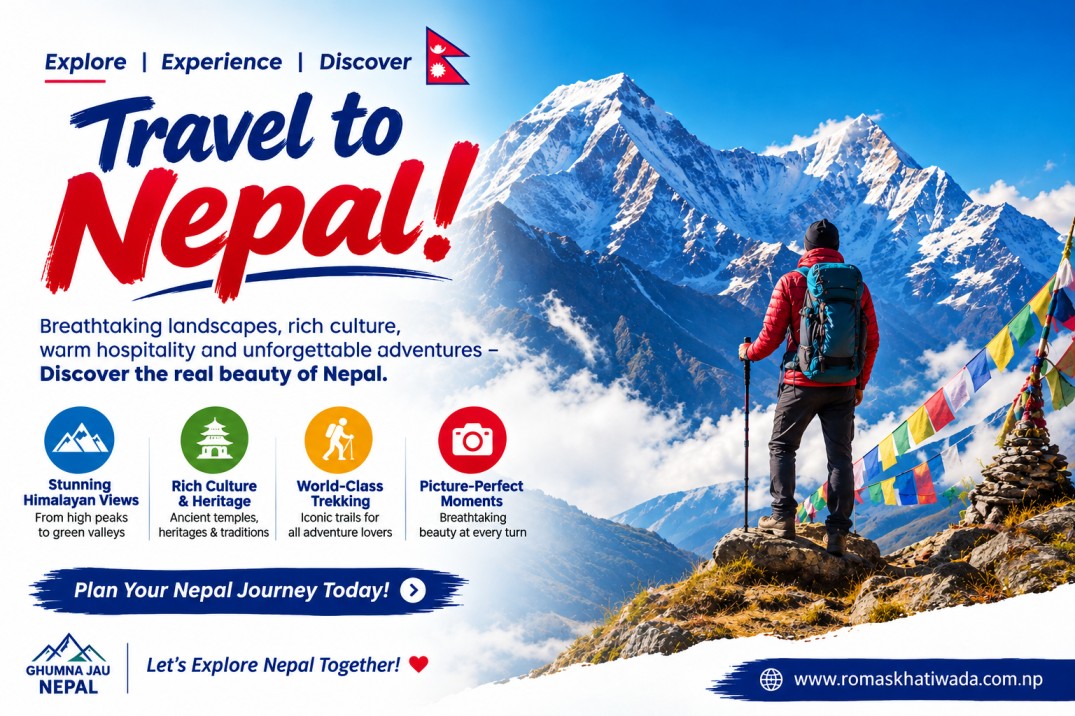 ```
```
Day 1: The Departure – From Kathmandu’s Chaos to Pokhara’s Lakeside
- Distance: ~200 km (Prithvi Highway) | Duration: 6–7 hours by tourist bus
- Altitude: 822 meters (Pokhara)
My alarm shattered the morning silence at precisely 5:30 AM. Stepping out of bed, I felt a familiar cocktail of nervousness and adrenaline surging through me. I checked my heavy backpack one last time—down jacket, broken-in trekking boots, thermal layers, and my trusted notebook. Navigating the early morning congestion at Kalanki, our bus finally broke free onto the winding curves of the Prithvi Highway. Over a rustic roadside lunch of local chicken curry and Dal Bhat near Muglin, I watched the murky waters of the Trishuli River rush alongside us. My mind kept looping back to a single question: “Will my body hold up? Can I truly make it to Annapurna?”
By 2:00 PM, the chaotic honking subsided as we rolled into Pokhara, and the transition felt like a deep, collective exhale. Later that evening, I walked down to the edge of Phewa Lake, watching the sunset dissolve into brilliant streaks of orange and purple over the water. For a brief moment, the iconic peak of Machhapuchhre peeked through a shroud of clouds as if welcoming me. Sitting at a lakeside café, sipping an espresso while watching seasoned trekkers analyze topographic maps at neighboring tables, the reality set in. This was my last night in a comfortable bed. Tomorrow, the true test would begin.
Journal Entry: Leaving the city means stripping away the unnecessary noise of modern life. Nature doesn’t care who you are; it only asks if you are quiet enough to listen.
Day 2: The Ascent Begins – Driving to Nayapul and Climbing to Ghandruk
- Duration: 3 hours driving, ~2 hours trekking
- Altitude: 1,940 meters
The journey from Pokhara to Nayapul was a jarring introduction to bumpy Himalayan dirt roads. We continued driving past Nayapul up to Kimche, where our actual foot trek began. The moment I stepped out of the jeep, the air felt crisp, carrying the distinct scent of damp pine needles and remote mountain soil.
Ghandruk welcomed us with its iconic slate-roofed houses, immaculate stone alleys, and golden ears of corn hanging to dry under wooden eaves. However, the true introduction to the trek came in the form of endless uphill stone steps. Within thirty minutes, my thighs were burning, and the dead weight of my pack made me question my physical preparation. But the moment I raised my eyes, the colossal walls of Annapurna South and Hiunchuli appeared against a piercing blue sky. The sheer scale of the peaks instantly erased my fatigue.
We settled into a traditional Gurung tea house for the night. Dinner was a massive, comforting plate of local Dal Bhat ($5.00) paired with homemade radish pickle. Later that evening, I struck up a conversation with the 72-year-old Gurung Aama (mother) running the lodge. Her wrinkled face carried the history of these hills. When I asked if life here was incredibly difficult, she smiled warmly and said, “The hardship of the hills is just our daily rhythm, child. You people come from the city to forget your troubles, but we find our peace right inside the struggle. Tomorrow, on your way to Chhomrong, walk slowly. The mountains aren’t going anywhere.”
Day 3: The Rollercoaster Terrain – Ghandruk to Chhomrong
- Duration: 6–7 hours | Altitude: 2,170 meters
- Trekking Tip: When walking downhill, the shock on your knees is intense. Keep your feet flat, lean slightly forward, and rely heavily on your trekking poles to distribute the weight.
Today taught me the true meaning of what guides call “Nepali Flat”—a grueling sequence of intense descents followed by immediate, steep climbs. We began by descending an endless flight of stone steps down to the bed of the Kimrong Khola. Crossing the swaying suspension bridge over the rushing river was exhilarating, with the icy wind trying to rip the cap off my head.
The real psychological test began after the river crossing. The climb up to Chhomrong was a relentless, three-hour vertical battle up the mountainside. We entered ancient rhododendron forests draped heavily in green moss, giving the trail a mystical, surreal atmosphere. Along the way, I met a couple of exhausted trekkers from Germany and Australia. Sharing a water break on a wooden bench, we exchanged weary smiles and a breathless “Namaste,” drawing strength from our shared struggle.
By 5:00 PM, we finally reached Chhomrong, a beautifully tiered village perched on a massive ridge. Annapurna South loomed so close it felt like I could reach out and touch its icy ridges. That night, over a hot bowl of garlic soup—a local remedy highly recommended for preventing altitude sickness—I watched millions of stars light up the darkest night sky I had ever seen.
Day 4: Deep into the Wilderness – Chhomrong to Sinuwa and Bamboo
- Duration: 5–6 hours | Altitude: 2,310 meters
- Vibe: Damp earth, towering bamboo canopies, and complete isolation
Our morning started with a classic mental challenge: descending over 2,500 stone steps down to the Chhomrong Khola, knowing full well I would have to climb every single one of them back up on the return leg. After crossing the river, we tackled the steep, sweating vertical wall up to Upper Sinuwa.
Past Sinuwa, the landscape shifted dramatically. Human villages disappeared, replaced by dense, untouched forests of bamboo, oak, and wild ferns. The canopy was so thick that the afternoon sun barely dappled the forest floor. The trail smelled of rich earth and wet stone, filled with the echo of the Modi Khola crashing through the gorge far below.
[Chhomrong Khola] ---> [Upper Sinuwa] ---> [Bamboo Forest] ---> [Bamboo Camp]
Watching families of gray Langur monkeys leaping effortlessly through the treetops provided a welcome distraction from my aching body. My shoulders were deeply bruised from the pack straps, and my lower back throbbed. By the time we reached the small clearing of Bamboo, the sun had already slipped behind the high ridges. Because this camp sits deep within a canyon, it gets dark and freezing very quickly. Huddling around the dining hall heater, playing with the lodge owner’s puppies, I realized how far away I was from the civilized world.
Day 5: The Alpine Transition – Bamboo to Deurali
- Duration: 6–7 hours | Altitude: 3,200 meters
- Atmosphere: Thinning air, old avalanche paths, and steep glacial valleys
Today, we officially broke past the 3,000-meter threshold. As we hiked through Dovan and past the settlement of Himalaya, the lush green jungle withered away. Towering trees were replaced by alpine shrubs, stunted birch, and massive rock walls weeping with melting ice. The Modi Khola was no longer a distant sound; we were now trekking right alongside its violent, rocky banks.
I could feel the air thinning with every steep step, making my chest tighten slightly. My guide kept a steady, rhythmic pace ahead of me, constantly repeating the golden rule of high-altitude trekking: “Bistari, bistari (Slowly, slowly), Romash.” I forced myself to drink water every twenty minutes; staying hydrated was my only insurance against the lurking threat of altitude sickness.
We passed Hinku Cave, a massive overhanging boulder that had sheltered early climbing expeditions decades ago. The stretch between Himalaya and Deurali felt intimidating, crossing old avalanche tracks where massive blocks of snow had hardened into icy, solid debris across the path. Reaching Deurali by late afternoon, the cold became biting and aggressive. My breath turned into thick plumes of white vapor. Wrapped tightly in my thermal layers and down jacket inside my sleeping bag, I went to sleep knowing I was on the very doorstep of the sanctuary.
Day 6: The Holy Grail – Deurali to Machhapuchhre Base Camp (MBC) and Annapurna Base Camp (ABC)
- Duration: 5–6 hours | Altitude: 3,700m (MBC) to 4,130m (ABC)
- Emotion: Uncontrollable tears, absolute awe, and a 360-degree theater of ice
This was the day that redefined everything. We left Deurali at dawn, walking along a widening valley floor bordered by sheer, vertical cliffs. Frost covered the sparse alpine grass, crunching loudly under my boots. After a breathless, lung-burning three-hour climb, we reached Machhapuchhre Base Camp (MBC). Here, the terrain cracked open completely, revealing a massive glacial bowl surrounded by mountains. The sacred, unclimbed spire of Machhapuchhre (Fishtail) stood directly before us, a staggering monument of rock and ice.
The final two-hour push from MBC to ABC was entirely spiritual. The incline wasn’t extremely steep, but the lack of oxygen at 4,000 meters made every single step feel like a monumental effort. I found myself taking ten slow steps, stopping to lean on my trekking poles to draw deep breaths, and moving again. The grey sky began to drop light flakes of snow around us. My fingers were completely numb, but my internal drive was unstoppable.
At exactly 2:15 PM, through a parting clearing in the mist, the wooden sign came into view: “Welcome to Annapurna Base Camp (4130M),” draped in hundreds of wind-whipped, colorful Buddhist prayer flags.
============================================
       WELCOME TO ANNAPURNA BASE CAMP
                 4,130 METERS
============================================
The moment my hand touched that cold wooden frame, tears spilled down my cheeks. They weren’t tears of physical exhaustion; they were the tears of a realization that a long-held dream had finally turned into reality under my feet. I stood in the dead center of the Annapurna Sanctuary—a flawless 360-degree colosseum of ice consisting of Annapurna I ($8,091 \text{ m}$), Annapurna South, Hiunchuli, and Machhapuchhre. The profound silence of the surrounding glaciers was broken only by the whistling wind.
ABC Reflection: I am sitting in a crowded dining hall at 4,130 meters while a snowstorm rages outside. Trekkers from South Korea, France, and Nepal are crammed around a single kerosene heater. Up here, all borders vanish. We are just human beings humbled by the scale of the earth.
Day 7: The Golden Sunrise and the Descent to Bamboo
- Duration: 7–8 hours | Altitude: 4,130m down to 2,310m (Bamboo)
- Visuals: Mountains turned to liquid gold and an accelerated journey home
At 5:00 AM, in a freezing minus 10 degrees Celsius environment, I stepped out onto the freezing ridge. The stars were slowly fading into a deep indigo sky. A quiet crowd of trekkers stood huddled together, our breath rising like smoke, eyes locked onto the massive face of Annapurna I.
At precisely 6:10 AM, the first rays of the sun struck the highest peak. In a matter of seconds, the white snow turned into a blazing, blinding shade of liquid gold.
[First Light] ---> Summit of Annapurna I Blazes Gold ---> [Full Sunrise over the Amphitheater]
The golden light slowly crept down the massive mountain walls, illuminating Annapurna South and Machhapuchhre in brilliant morning warmth. Holding a hot mug of black tea, I watched this celestial display in absolute silence, feeling incredibly small yet entirely connected to the universe.
At 9:00 AM, with a heavy heart and a sense of immense gratitude, we began our descent. With gravity on our side and our lungs rejoicing in the increasing oxygen levels, we covered ground quickly. We retraced our steps through MBC, Deurali, and Dovan, arriving back at the familiar camp of Bamboo by evening, our legs exhausted but our spirits full.
Day 8: Rejuvenation – Bamboo to Jhinu Danda (Natural Hot Springs)
- Duration: 4–5 hours | Altitude: 1,780 meters
- The Reward: Soaking tired muscles right next to a thundering glacial river
Leaving Bamboo, we headed back toward Chhomrong. Facing those 2,500 stone steps upward to Chhomrong on the return leg was perhaps the ultimate physical test of the trek. My legs felt hollow, but the ice-cold bottle of Coca-Cola I bought at the top felt like the ultimate reward. From Chhomrong, the trail branched off, dropping steeply down a ridgeline toward Jhinu Danda.
Jhinu is famous for its natural hot springs situated right on the banks of the Modi Khola. After checking into a lodge, we walked twenty minutes down a steep forest trail to the riverbank. There, nestled right beside the crashing, freezing waters of the glacial river, were stone pools filled with hot, mineral-rich volcanic water bubbling out of the earth.
I lowered my bruised, trail-worn body into the steaming water, and the relief was instantaneous. Eight days of accumulated fatigue, sweat, and muscle knots melted away in minutes. Soaking in that therapeutic warmth while listening to the icy river roar just feet away was a sensory experience that felt like pure luxury.
Day 9: The Final Steps – Jhinu to Siwai and the Return to Pokhara
- Duration: 3 hours trekking, 3 hours driving
- Vibe: Victory meals, live music, and the comfort of running water
Our final day of walking was a relaxed, celebratory stroll through low-altitude agrarian valleys. We crossed a massive, high suspension bridge spanning the canyon near Jhinu, taking in views of terraced rice fields and local watermills. The giant white peaks slowly receded into the hazy sky behind us as we walked toward the road head at Siwai.
When we reached Siwai and hopped into our waiting jeep, a profound wave of accomplishment hit me. The circle was complete; I had walked to the heart of the Annapurna range and back.
That evening in Pokhara was dedicated to celebration. After a long, luxurious hot shower, we headed to a lively restaurant along Lakeside. Eating fresh wood-fired pizza and listening to a local band play classic rock covers felt surreal after days of isolated mountain life. Walking along the edge of Phewa Lake late at night, I felt an overwhelming sense of inner peace.
Day 10: The Road Home – Pokhara to Kathmandu and My Spiritual Summary
- Route: Pokhara to Kathmandu by tourist bus
As our bus vibrated along the highway back to Kathmandu today, I sat by the window with this diary resting on my knees. The dust of the mountains covered my backpack, but my mind felt completely clear. The Annapurna Base Camp trek is not just a physical trail to cross off a bucket list; it is a transformative journey that strips away the superficial layers of modern existence until only your true character remains.
Final Reflections for My Blog Readers:
- The Art of the Slow Step: In the city, we are obsessed with speed and immediate results. The mountains don’t care about your schedules. If you rush, the altitude breaks you. You survive by focusing entirely on the single step right in front of you. That is how monumental goals are achieved—one small, disciplined step at a time.
- Radical Humility: Standing inside that sanctuary, looking up at vertical miles of ancient ice that have stood for millennia, your personal worries shrink into nothing. It is the ultimate cure for the ego. We are temporary guests on this beautiful planet; we might as well live lightly and harmoniously.
- The Freedom of Less: For ten days, my entire life was contained within a 45-liter backpack. I didn’t need a massive wardrobe, digital distractions, or endless choices. I just needed shelter, warm food, water, and human connection. True wealth is an unburdened mind.
The mud on my trekking boots will eventually be washed away, and the physical soreness will fade, but the image of the golden sunrise over Annapurna I and the sound of prayer flags whipping in the mountain wind will remain anchored in my soul forever.
